

 Skip to content
Building bigger arms is a common goal for many individuals interested in improving their physical appearance and enhancing their strength. The pursuit of more defined and muscular arms often leads people to incorporate targeted exercises into their fitness routine. Achieving bigger arms not only contributes to a more toned look but also boosts performance in various activities that require arm strength and endurance.
It is essential to understand that developing arm muscles involves more than just repetitive motion; it requires a strategic approach combining various exercises that focus on both the biceps and triceps. Engaging these muscles through a mix of workouts can help ensure balanced growth and symmetry, while also reducing the risk of injury. This article will discuss ten exercises designed to increase arm size effectively.
Barbell curls are a classic exercise targeting the bicep muscles. They are known for their effectiveness in building arm size and strength. To perform a barbell curl, one needs a standard barbell loaded with the desired weight. The starting position involves standing up straight with feet shoulder-width apart and gripping the barbell with an underhand grip, hands also shoulder-width apart.
The movement begins by curling the barbell upwards towards the chest while keeping the elbows close to the body and the upper arms stationary. Only the forearms should move. The aim is to contract the biceps fully at the top of the movement and then slowly lower the barbell back to the starting position.
Sets and repetitions can vary depending on the individual’s goals. For increasing strength, doing four to five sets of eight to ten repetitions is common practice. Beginners may start with lighter weights to ensure proper form. The barbell curl not only engages the biceps but also works the forearms and to a lesser extent, the shoulders. Regular practice of this exercise is beneficial for anyone looking to improve their upper body strength.
To prevent injuries, it’s recommended to warm up properly and avoid using momentum to lift the weight. Controlled movement is key to engaging the bicep muscles effectively. The barbell curl can be included in a varied workout routine that targets different muscle groups for balanced upper-body development.
Dumbbell hammer curls are a popular exercise for targeting the muscles in the arms, specifically the biceps and brachialis. They stand out due to their use of a neutral grip, which means that one’s palms are facing towards their body during the movement. This position allows for a stronger focus on the brachialis, a muscle that can contribute to the overall thickness of the arms when developed.
To perform dumbbell hammer curls, one should start by standing up straight with a dumbbell in each hand, arms fully extended, and palms facing the torso. They should maintain a straight back and keep their shoulders stationary throughout the exercise. As they curl the weights upwards, it’s important to keep the elbows tucked in close to the torso and avoid using momentum to lift the weights.
The movement should be performed slowly and with control, raising the dumbbells until the biceps are fully contracted and the dumbbells are at shoulder level. They should take care to squeeze the biceps at the top of the movement before slowly lowering the weights back to the starting position. This can help maximise muscle engagement and growth.
For best results, it’s recommended to perform hammer curls in sets of 8-12 reps, with a weight that makes completing the set challenging yet still allows for proper form. This exercise is quite versatile and can be paired with other exercises in a superset or included in a dedicated arm workout routine.
Tricep dips are a powerful bodyweight exercise targeting the triceps, the muscles at the back of the upper arm. This exercise can be performed with minimal equipment, commonly using a bench or parallel bars. For those looking to build arm strength and size, tricep dips are incredibly effective due to their ability to engage all three heads of the tricep muscle.
When performing tricep dips, one’s hands should be placed shoulder-width apart on the chosen apparatus. With arms straight, the body is then lowered by bending the elbows until they reach a 90-degree angle, ensuring the elbows point backwards and stay close to the body. It is important to keep the shoulders down and away from the ears to avoid strain. The movement is completed by pushing back up to the starting position, fully extending the arms.
Advantageous for their versatility, tricep dips can be made easier by bending the knees or harder by straightening the legs or even elevating them. According to Men’s Health, proper technique is crucial to avoid injury and to ensure that the focus remains on the triceps rather than the shoulders or chest.
Consistency with tricep dips can lead to marked improvements in upper body strength and muscle definition. Engaging the core throughout the exercise will also contribute to overall stability and balance, making tricep dips a robust inclusion to any workout routine aiming for bigger and stronger arms.
Preacher curls are a popular exercise targeting the biceps. They require the use of a preacher bench, which has an angled pad where one rests their upper arms. This position isolates the biceps muscle by preventing other muscle groups from assisting in the curling movement.
To perform the exercise, one sits on the preacher bench, places their upper arms on the pad, and grips a barbell or dumbbell with a underhand grip. Then, they curl the weights upwards toward the shoulders, focusing on squeezing the biceps at the top of the motion before lowering the weights under control.
There are variations of the preacher curl for those looking to mix up their workout. Using dumbbells instead of a barbell can help improve unilateral strength, which targets muscle imbalances by training each arm independently. Other variations involve using different angles or equipment like an EZ curl bar to shift the emphasis slightly on different parts of the biceps.
The preacher curl engages not only the biceps brachii but also the brachialis and brachioradialis to a lesser extent. These supporting muscles contribute to overall arm thickness and strength. Engaging these muscles makes preacher curls an effective exercise for those aiming to enhance arm size and definition.
Skull crushers are a strength training exercise that targets the triceps muscles at the back of the upper arm. They are performed lying on a bench or the floor with weights extended above the chest. This exercise is highly effective for developing tricep size and arm strength.
In performing skull crushers, one should lie flat on a bench, holding a barbell or an EZ curl bar which can reduce strain on the wrists. The weight is lowered towards the forehead by bending the elbows, hence the name. It is crucial to keep the upper arms stationary, only allowing the forearms to move, which focuses the effort on the triceps.
For those experiencing discomfort in the elbows during this exercise, it’s advised to aim for higher rep counts with lighter weights. Engaging in reps anywhere from 8 to 20 can be beneficial and may help avoid injury. There are also variations that can be explored, such as using dumbbells or adjusting grip width for comfort.
Skull crushers can be included in an arm workout routine that seeks to enhance tricep development. It is essential to perform the exercise with proper form to prevent injury and maximize effectiveness. This exercise is not just about lifting heavy; it’s also about control and technique. Lowering the weight under control, as one would find in guide for skullcrusher triceps exercises, is key to keeping tension on the triceps and off the elbows.
To sum up, incorporate skull crushers into a regular workout plan for bigger, stronger arms. An effective set of skull crushers will use proper form, moderate weights, and a variation that suits individual comfort and goals.
The overhead tricep extension is an essential exercise for targeting the triceps muscles. It’s performed by holding a weight above the head and then bending the elbows to lower the weight behind the head. This movement helps to focus on the long head of the triceps, which is crucial for creating the appearance of bigger arms.
One can perform the exercise with various equipment, such as dumbbells, a barbell, or a cable machine with a rope attachment. Research has indicated that this exercise can lead to significant triceps muscle growth, especially when compared to other triceps exercises.
To carry out this exercise accurately, begin by standing straight and grasping the weight with both hands. Hold the weight above your head, ensuring that your arms are fully extended. Keeping your upper arms still, bend your elbows to lower the weight behind your head. The motion should be controlled and elbows kept in close to your head to maximise engagement of the triceps.
After lowering the weight, extend the elbows to return to the starting position. It’s crucial to complete each repetition with full control to engage the triceps properly and to prevent injury.
For those who are new to the overhead tricep extension, it’s recommended to choose a light weight to start with and focus on the proper form. Over time, one can increase the weight to continue challenging the muscles for growth. This exercise can be a core part of any arm-strengthening routine, often performed after a warm-up for 3-4 sets of 8-12 repetitions.
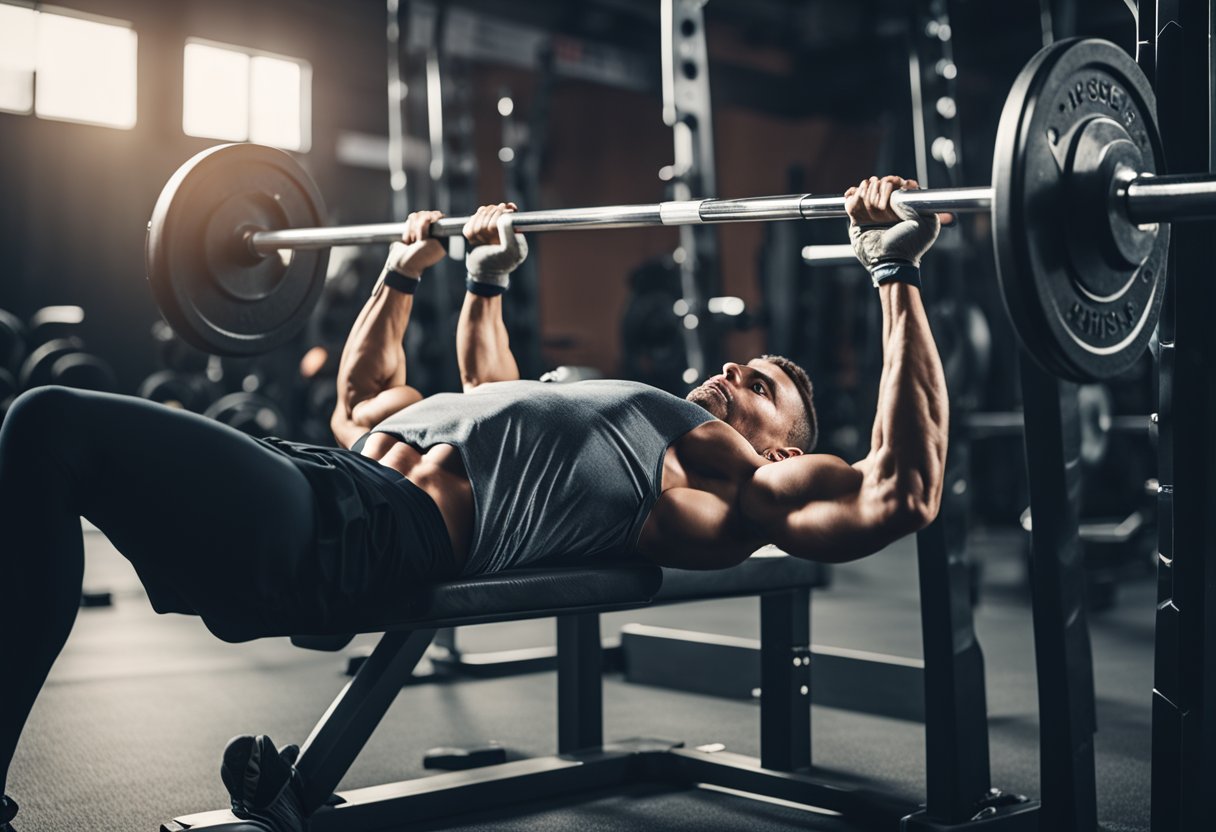
The close-grip bench press is a strength exercise that focuses on the triceps, chest, and shoulders. This variation of the bench press places the hands closer together, which shifts more of the work to the triceps muscles.
To perform this exercise, one should lie flat on a bench, positioning their hands on the barbell with a grip that is narrower than shoulder width. The feet should be planted firmly on the floor. It is important to maintain tightness across the body by engaging the core and squeezing the shoulder blades together, creating a solid base.
As the barbell is carefully lowered towards the chest, the elbows should stay close to the body to keep the strain on the triceps. Once the bar touches the chest, the individual should push the bar back up to the starting position, focusing on using the triceps to do most of the lifting.
The close-grip bench press is not only beneficial for increasing arm size but also for improving overall upper body strength. It can also support the development of a stronger standard bench press by enhancing triceps strength.
It’s essential to keep the weight manageable, focusing on the correct technique to prevent injury. Beginners should start with lighter weights to get used to the form and to ensure they are hitting the right muscles. As with any resistance training, it is recommended to seek guidance from a fitness professional to ensure proper form and prevent injury.
Chin-ups are a powerful exercise for building bigger arms and improving upper body strength. By utilising one’s body weight, they target the biceps and forearms, as well as the latissimus dorsi muscles in the back. When performing chin-ups, grip the bar with palms facing towards the body. This grip places more emphasis on the bicep muscles compared to the alternative grip used in pull-ups.
To execute a proper chin-up, they should stand under a chin-up bar, reach up, and grasp the bar with a shoulder-width grip. Prior to lifting off, shoulders ought to be pulled down and back, engaging the lats, and they should maintain a slight bend in the elbows to protect the joints. Inhaling and pulling the body upwards until the chin is above the bar ensures that the movement is powered by the arm and back muscles. They should squeeze the muscles at the top of the motion before slowly lowering back to the starting position.
For those looking to increase arm size, adding weight to chin-ups can be particularly effective once the individual can comfortably perform sets within the 6-12 rep range. However, it’s important to progress gradually to avoid injury.
As a compound exercise, chin-ups not only stimulate the biceps but also provide comprehensive benefits for the upper body, making them an indispensable addition to any arm-building routine. Their ability to progress through bodyweight manipulation or additional weights makes them a versatile and challenging workout component for individuals of various fitness levels.
Cable pushdowns are a popular exercise targeted at developing the triceps muscles, which are located on the back of the upper arms. They involve pushing a cable attachment down towards the hips while keeping the elbows pinned to the sides. This exercise is effective because it provides constant tension on the triceps, which can help in increasing their size and strength.
One performs cable pushdowns by standing in front of the cable machine, grasping the attachment with both hands, and pushing it downwards until the arms are fully extended without locking the elbows. The position of the hands can vary; using a rope attachment allows for wrist rotation and a greater range of motion, engaging all three heads of the triceps more effectively.
Maintaining proper form during cable pushdowns is crucial. One should keep their back straight, shoulders down, and core engaged to prevent using momentum to lower the weight. A common mistake is to use too much weight, which can lead to arching the back or swinging the arms, thus reducing the effectiveness on the triceps and increasing the risk of injury.
For beginners, a lighter weight with a higher number of repetitions can be beneficial to ensure correct form and prevent elbow strain. Over time, increasing the weight while maintaining proper technique can lead to noticeable improvements in the size and shape of the triceps. Including reverse-grip pushdowns can also help target the triceps from different angles, contributing to a more comprehensive arm workout.
Concentration curls are a strength training exercise that targets the biceps muscles. They are performed using a dumbbell and are known for their effectiveness in building arm muscle size and strength. When done correctly, this exercise isolates the biceps to provide a focused workout.
For proper form, one should sit at the end of a bench with their legs spread. Pick up the dumbbell with one hand, place the back of the upper arm on the same side thigh, and extend the arm holding the dumbbell towards the floor. The palm should face forward and away from the thigh. The other hand can rest on the opposite knee for balance.
They begin the curl by bringing the dumbbell upwards towards the shoulder, carefully contracting the bicep. It’s essential to maintain control and not to swing the weight. It’s recommended to perform 3 sets of 8 to 12 reps per arm to effectively work the muscle. It is also crucial to emphasise the squeeze at the top of the movement to maximise muscle engagement.
Concentration curls are often done towards the end of the bicep workout, after the muscles have been pre-exhausted with other exercises. This allows for a higher level of bicep muscle fatigue, which can stimulate growth. It is advised to alternate arms and maintain even repetitions for balanced muscle development.
The arm houses some essential muscles crucial for daily activities and strength training. Understanding their structure and roles can enhance workout effectiveness.
The biceps, or biceps brachii, is a two-headed muscle at the front of the upper arm. It consists of a long head and a short head. This muscle is responsible for flexing the elbow and rotating the forearm. Exercises targeting this muscle often include curls, which can be performed with various equipment like dumbbells, barbells, or resistance bands.
The triceps brachii is a three-headed muscle located at the back of the upper arm. Its primary function is the extension of the elbow joint, straightening the arm. The heads are known as the long, lateral, and medial heads. For stimulating triceps growth, exercises such as push-downs and overhead triceps extensions are commonly used.
The forearm’s muscular structure is intricate, involving several smaller muscles that control hand and finger movements. The main muscle groups are the flexors, on the inside, and the extensors, on the outside. They also contribute to wrist movement. Strengthening these muscles can be achieved through exercises like wrist curls and extensions.
To achieve bigger and stronger arms, one must focus on applying more weight or resistance over time, ensuring proper rest between workout sessions, and consuming the right nutrients to support muscle growth.
Progressive overload is the gradual increase of stress placed upon the body during exercise. To build arm size and strength:
For instance, if someone is performing bicep curls with 10kg dumbbells, they may aim to increase to 10.5kg after a consistent period where the current weight feels less challenging.
Muscles need time to repair and grow after a workout. Key points are:
Incorporating activities such as stretching or yoga can further enhance muscle recovery, making it possible for the arms to come back stronger for the next workout.
Proper nutrition is essential for muscle growth and repair. Points to note include:
A balanced diet that includes lean meats, whole grains, and a variety of vegetables will supply the necessary vitamins and minerals to support arm development and overall health.
When aiming for bigger arms, it’s crucial to focus on training that supports balanced growth and technique. Missteps in your routine can slow down progress and even lead to injury.
Training biceps too frequently can lead to overuse injuries and hinder growth. Biceps are a small muscle group and don’t require daily workouts. Limit bicep-focused sessions to 2-3 times per week, allowing for adequate recovery. Symptoms of overtraining include:
Triceps make up a significant portion of the arm and should not be ignored. Equally important are the forearms for a complete arm development. Balance your arm workout by including exercises for triceps and forearms to achieve optimal results.
Using correct form is essential for maximising muscle engagement and minimising the risk of injury. Don’t lift too heavy if it means sacrificing form. Prioritise proper technique over the amount of weight lifted. Here are some key pointers for maintaining proper form:
In the quest for more muscular arms, individuals often have questions about the most effective exercises, alternative methods without weights, and timeframe for achieving results. The answers below provide targeted advice for both gym and home workouts.
Dumbbell exercises like Dumbbell Hammer Curls are potent for increasing arm size. They target the brachialis, which can contribute to overall arm thickness. Other dumbbell exercises include concentration curls and dumbbell kickbacks, each focusing on bicep and tricep development respectively.
Bodyweight exercises such as tricep dips can effectively increase arm size without the need for weights. Techniques like diamond push-ups, arm circles, and tricep dips utilise the body’s weight to provide resistance and stimulate muscle growth.
For targeting biceps, Barbell Curls and Preacher Curls are excellent choices, as these isolate the biceps and can help in progressive overload. For triceps, Skull Crushers and cable tricep pushdowns are recommended for effective isolation and muscle building.
To increase arm girth at home, exercises like push-ups, planks, and dips can be performed using furniture for support. These exercises engage multiple arm muscles and can be modified to increase intensity as one’s strength improves.
While significant muscle growth typically takes longer than a week, with intense and targeted workouts, one may see initial improvements in muscle tone and feel. However, lasting and visible muscle hypertrophy requires a more extended period, along with consistent effort and nutrition.
Adding bulk to the arms quickly requires a combination of consistent, heavy, and compound lifting with an emphasis on exercises like Skull Crushers and barbell curls. Adequate rest, proper nutrition, and progressively increasing the weights used in workouts are key components of rapid arm bulking strategy.

 Optimized by Seraphinite Accelerator