

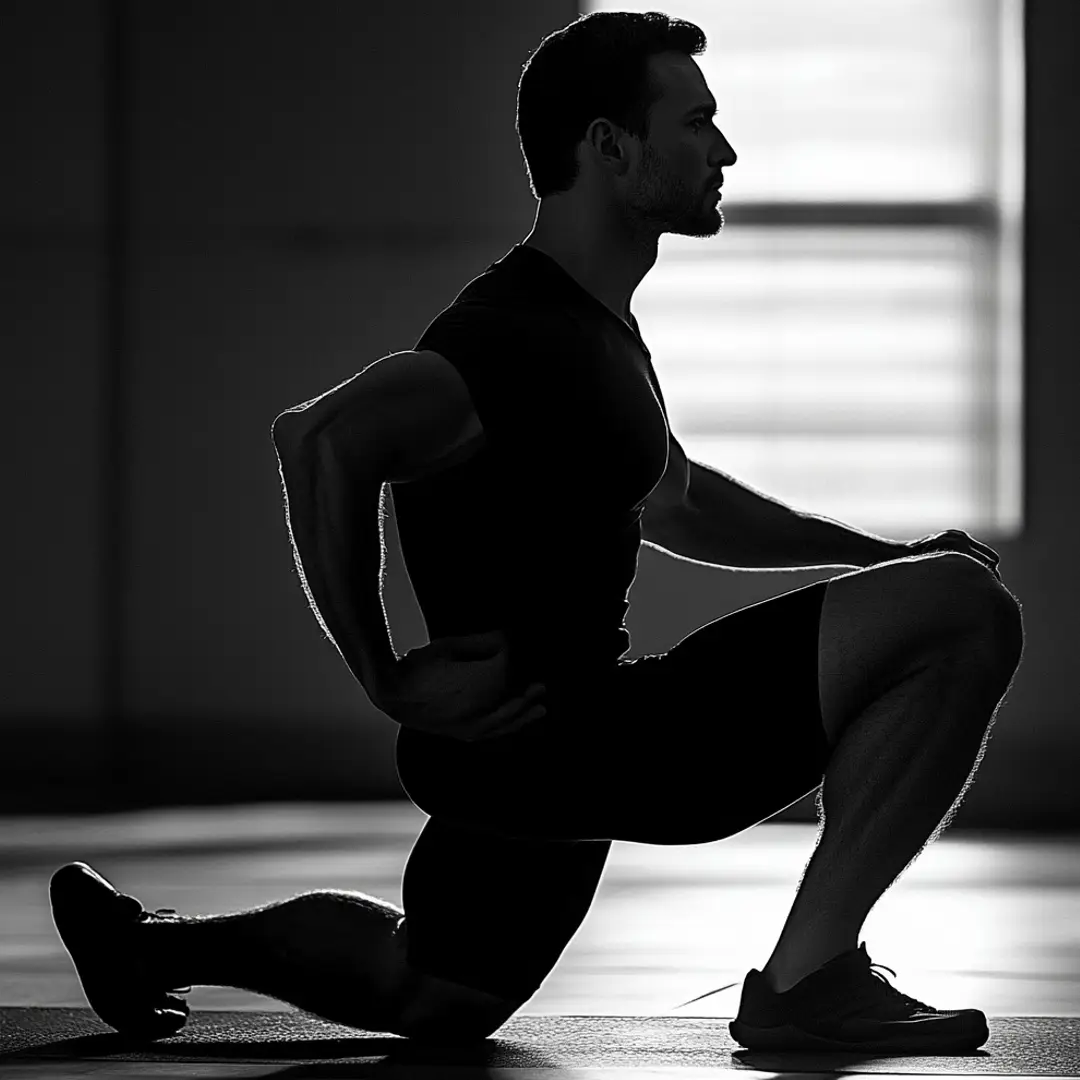
Staying active and mobile is key to a healthy lifestyle. As we age, our balance and flexibility can decline, making everyday tasks more challenging.
The good news is that with the right exercises, we can improve our mobility and balance at any age.
Regular mobility and balance exercises can help prevent falls, enhance posture, and boost overall fitness levels. These exercises don’t require fancy equipment or gym memberships.
Simple movements like stepping up and down on a stair or practising standing on one leg can make a big difference.
We can all benefit from adding mobility and balance exercises to our routines. Whether you’re an athlete looking to improve performance or someone who wants to stay steady on your feet, these exercises are for you.
Let’s explore some of the best moves to keep us nimble and strong.
Balance and mobility are key to our everyday movements. They rely on complex systems in our body working together.
Let’s explore the main parts that help us stay steady and move with ease.
Our vestibular system is like a built-in GPS for our body. It’s found in our inner ear and helps us know which way is up. This system sends signals to our brain about our head’s position and movement.
When we turn quickly or stand up fast, our vestibular system kicks in. It helps us stay upright and not fall over. It’s also why we can walk in a straight line with our eyes closed.
If our vestibular system isn’t working well, we might feel dizzy or off-balance. That’s why exercises that challenge this system can really boost our balance skills.
Proprioception is our body’s ability to sense where it is in space. It’s like having eyes all over our body, but instead of seeing, they feel.
This sense comes from special receptors in our muscles and joints. They tell our brain where each body part is, even when we can’t see it.
It’s how we can touch our nose with our eyes closed or know where our feet are when we’re walking.
Good proprioception helps us move smoothly and avoid bumping into things. When we improve this skill, we become more graceful and less likely to trip or fall.
Strength and stability go hand in hand with good balance and mobility. Strong muscles, especially in our core and legs, help us stay steady.
Good posture is key too. When we stand tall with our shoulders back, we distribute our weight evenly. This makes it easier to stay balanced.
Stability exercises, like standing on one leg, can really help. They make our muscles work together better. This improves our balance and makes everyday tasks easier.
By working on these areas, we can move more freely and confidently. It’s not just about avoiding falls – it’s about feeling great in our own bodies.
Enhancing your balance is crucial for daily activities and preventing falls. These exercises will help you build strength and stability in your legs and core.
To start improving your balance, try standing with your feet together. Close your eyes for a few seconds to challenge yourself.
As you get better, try standing on one foot.
We recommend practising these exercises near a wall or chair for support. Aim to do them for 30 seconds at a time, three times a day.
Another great technique is the step-up exercise. Use a low step and slowly step up and down, focusing on control. This helps strengthen your legs and improve coordination.
The one-leg stand is a fantastic exercise for balance. Start by lifting one foot off the ground and holding the position for 30 seconds. Switch legs and repeat.
To make it harder, try these variations:
For an extra challenge, try the “tree pose” from yoga. Stand on one leg and place your other foot on your inner thigh or calf. Hold for 30 seconds, then switch sides.
The heel-toe walk is brilliant for improving balance and coordination. It’s like walking on a tightrope, but on the ground!
Here’s how to do it:
Try to walk in a straight line. If you need support, do this exercise along a wall. As you get better, try walking backwards using the same technique.
Improving mobility can make a world of difference in our daily lives. Let’s explore some key exercises that can boost our flexibility and range of motion.
Hip and shoulder mobility is crucial for many everyday movements. We can start with simple hip circles to loosen up.
Stand tall and move your hips in a circular motion, 10 times clockwise and 10 times anticlockwise.
For shoulders, try arm circles. Extend your arms out to the sides and make small circles, gradually increasing the size. Do 10 forward and 10 backward.
A great exercise for both hips and shoulders is the 90-90 stretch. Sit on the floor with one leg bent in front at a 90-degree angle and the other behind you, also at 90 degrees. Rotate your torso towards the front leg, then switch sides.
To improve our overall range of motion, we can use a mix of stretches and dynamic movements.
The inchworm walk is brilliant for this. Start in a standing position, bend down and walk your hands out until you’re in a plank. Then, inch your feet towards your hands and stand up.
Lunges with rotation are another top choice. Step forward into a lunge, place one hand on the floor, and rotate your upper body towards the front leg. This targets multiple areas at once.
Don’t forget about your spine! Cat-cow stretches can help. Start on hands and knees, arch your back up like a cat, then drop your belly towards the floor like a cow.
Mobility aids can take our exercises to the next level.
A foam roller is a brilliant tool for releasing tight muscles. We can use it on our legs, back, and even arms.
For shoulder mobility, a resistance band is ace. Hold it with both hands in front of you, then raise your arms overhead and behind you, keeping the band taut.
Yoga blocks are great for hip openers. Try a pigeon pose with a block under your hip for support. This helps us ease into deeper stretches safely.
Remember, consistency is key with mobility work. Even 10 minutes a day can make a huge difference in how we move and feel.
Building strength in key muscle groups helps us stay stable and balanced. Strong muscles support our joints and keep us steady during daily activities and workouts.
Our core muscles are crucial for stability. They help us stand tall and move with control. Let’s focus on some key core exercises:
These moves target our deep abdominal muscles and lower back. Aim to do them 2-3 times a week. Remember to breathe steadily and keep our core engaged throughout each exercise.
Strong legs and glutes are vital for balance. Squats are a brilliant exercise for building lower body strength. Here’s how to do them properly:
Start with bodyweight squats and progress to weighted versions. Add lunges and step-ups to your routine for extra leg strength and stability.
Resistance training boosts our overall strength and stability. We can use weights, resistance bands, or our own body weight.
Try these exercises:
Mix in accessory work like calf raises and ankle exercises. These smaller muscles play a big role in our balance.
Aim for 2-3 strength sessions per week, focusing on proper form over heavy weights.
Yoga and tai chi offer amazing ways to boost our flexibility and balance. These gentle practices can help us move more easily and feel steadier on our feet.
Yoga is brilliant for stretching our muscles and improving our balance. The tree pose is a top choice for boosting our stability.
We stand on one leg, place our other foot on our inner thigh, and raise our arms overhead.
Other great poses include:
These poses help us build strength and flexibility at the same time. We can start with just a few minutes a day and gradually increase our practice.
Yoga benefits include better mood, sharper thinking, and less pain. It’s a fab way to feel good in our bodies and minds.
Tai chi is all about slow, flowing movements. It’s like a gentle dance that helps us improve our balance and coordination.
We focus on our breathing and move from one pose to the next.
Some key tai chi movements include:
These gentle movements can strengthen our muscles and improve our flexibility. Tai chi is great for all ages and fitness levels.
We can practise tai chi indoors or outdoors. It’s a lovely way to start our day or unwind in the evening.
Staying active is crucial for managing various health conditions. We’ve put together some tailored exercise programmes to help you move better and feel your best.
Arthritis can make movement painful, but the right exercises can help.
We recommend low-impact activities that are gentle on the joints. Swimming and water aerobics are brilliant choices, as the water supports your body weight.
Gentle stretching and range-of-motion exercises can improve flexibility and reduce stiffness.
Try arm circles or ankle rotations while sitting.
Strengthening exercises using light weights or resistance bands can help support your joints.
Focus on the muscles around affected areas. For example, if you have knee arthritis, work on strengthening your thighs.
Always start slowly and listen to your body. It’s normal to feel some discomfort, but stop if you experience sharp pain.
For those with Parkinson’s, regular exercise can improve balance, mobility, and overall quality of life. We suggest a mix of activities to address different symptoms.
Balancing exercises are key. Try standing on one foot while holding onto a chair, or practise heel-to-toe walking. These help prevent falls and boost confidence.
Strength training exercises can combat muscle weakness. Use light weights or resistance bands to work major muscle groups. Squats and lunges are great for lower body strength.
Aerobic activities like brisk walking or cycling can improve cardiovascular health and mood. Aim for 30 minutes a day, five days a week.
Stretching exercises help with rigidity. Gentle yoga or tai chi can be particularly beneficial, improving flexibility and reducing stress.
For those experiencing dizziness or vertigo, specific exercises can help retrain the balance system. Always check with your doctor before starting these.
The Epley manoeuvre is effective for certain types of vertigo. It involves a series of head movements to reposition inner ear crystals. A healthcare professional can guide you through this.
Gaze stabilisation exercises can reduce dizziness. Try focusing on a target while moving your head from side to side. Start slowly and increase speed as you improve.
Balance exercises are crucial. Standing with feet together or on one foot can challenge your balance system. Use a wall or chair for support if needed.
Remember, consistency is key. Practise these exercises regularly, but stop if symptoms worsen.
As we age, it’s crucial to adapt our exercise routines to maintain mobility and balance. Let’s explore some practical strategies that can help older adults stay safe and active.
Falls are a major concern for older adults, but there are ways to reduce the risk.
We recommend starting with simple balance exercises like standing on one foot or walking heel-to-toe. These can be done whilst holding onto a chair or wall for support.
Tai Chi is another excellent option. It’s gentle on the joints and helps improve coordination. Many community centres offer classes tailored for seniors.
For those with limited mobility, seated exercises can be just as effective. Try ankle rotations or leg lifts whilst sitting in a sturdy chair. These movements help strengthen the muscles needed for balance.
Don’t forget about your surroundings. Remove tripping hazards at home and ensure good lighting. Wearing proper footwear with non-slip soles can also make a big difference.
Regular activity is key to a long, healthy life.
We suggest aiming for at least 30 minutes of moderate exercise most days of the week. This doesn’t have to be all at once – three 10-minute sessions work just as well.
Walking is a brilliant option for older adults. It’s free, requires no special equipment, and can be done almost anywhere. Start with short distances and gradually increase as your fitness improves.
Swimming or water aerobics are great low-impact choices. The water supports your body weight, making it easier on your joints. Many pools offer special sessions for older adults.
Don’t overlook strength training. Using light weights or resistance bands can help maintain muscle mass and bone density. If you’re new to this, consider working with a fitness instructor who specialises in senior exercise.
Remember, it’s never too late to start. Even small increases in activity can lead to big improvements in health and wellbeing.
Ready to take your mobility and balance to the next level? Let’s explore some advanced tools and exercises that can really boost your skills. We’ll look at how to use stability balls and Bosu trainers, as well as some tricky balance moves.
Stability balls and Bosu trainers are brilliant for ramping up your workout.
On a stability ball, try doing squats or plank holds. This forces your core to work extra hard.
For a real challenge, do a reverse lunge with your back foot on the ball. It’s tough but great for your balance!
Bosu trainers are ace too. Stand on the flat side for squats or do push-ups with your hands on the dome. These exercises make your muscles work in new ways.
Remember, start slow and build up. It’s okay if you wobble at first – that’s part of the learning!
Now let’s look at some moves that really test your balance.
The Cossack squat is a top choice. It’s like a side lunge but deeper, and it’s fab for hip mobility.
Another cracking exercise is the shoulder CAR (Controlled Articular Rotation). This helps your shoulder mobility and strength.
For a full-body challenge, try the tree pose on a Bosu.
Stand on one leg on the dome side and hold your balance. It’s tougher than it looks!
These moves are quite tricky, so don’t worry if you can’t do them right away. Keep practising and you’ll see big improvements in your balance and mobility.
