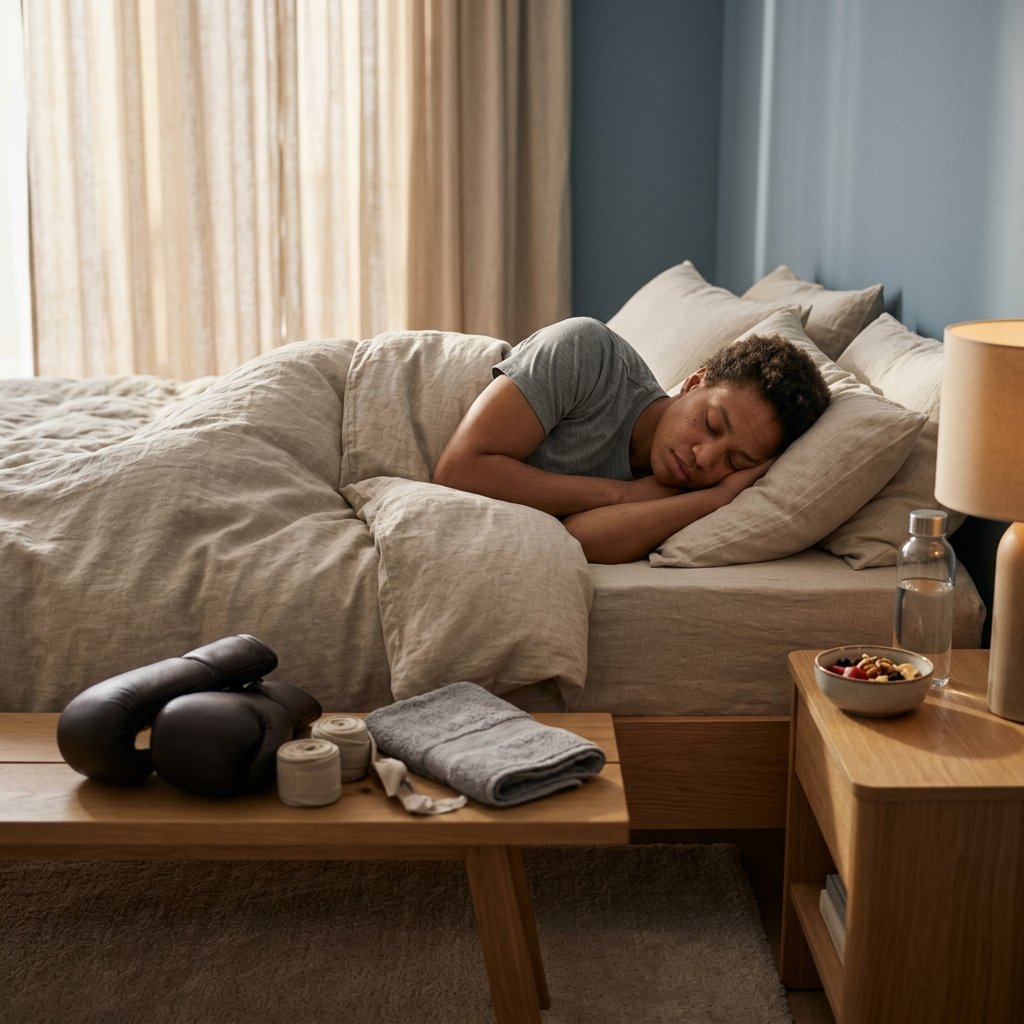
Training hard is only half the job.
The other half happens while we sleep, when our bodies repair muscle, restore energy and reset our minds for the next session.
For fighters and combat athletes, this recovery time is just as important as the hours spent on the mats or in the ring.
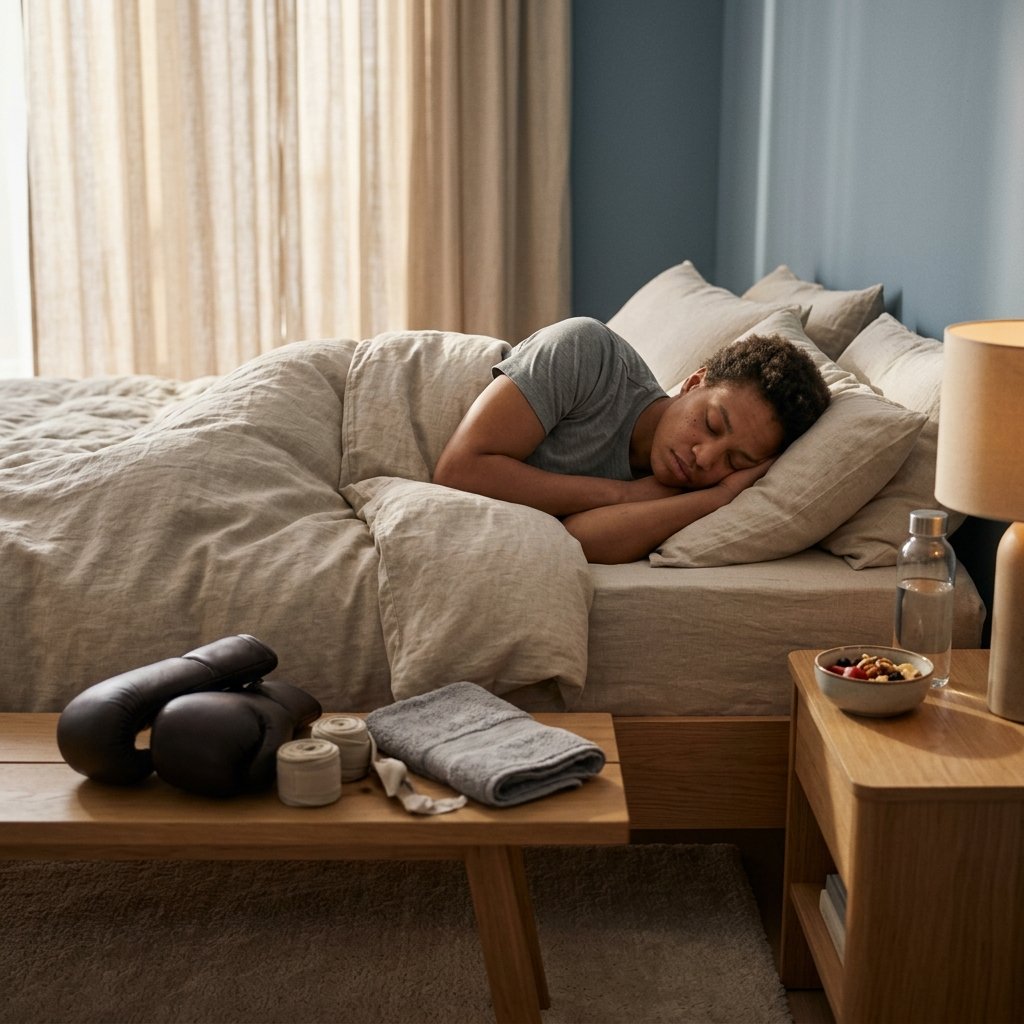
We all know the feeling of pushing through a tough camp on too little rest.
Skipping sleep might not seem like a big deal at first, but it quietly chips away at our strength, reaction speed and focus.
Over time, this can slow our progress and increase our risk of injury, which is the last thing any of us want before a big fight.
In this post, we’ll look at why sleep matters so much for recovery, how poor rest affects our performance, and simple ways to build a sleep routine that fits around training.
We’ll also cover how to balance training load, fuel our bodies properly, and manage rest during busy fight camps, travel and weight cuts.
Key Takeaways
- Good sleep is the base that all other recovery methods build on.
- Poor rest can quietly lower our strength, speed and focus over time.
- Matching our training and daily habits to our recovery needs helps us stay strong and injury free.
Why Sleep Is the Foundation of Recovery

When we train hard in combat sports, our body does most of its repair work while we sleep.
Good sleep and recovery go hand in hand, affecting our muscles, hormones, and immune system.
Overnight Muscle Repair and Tissue Adaptation
Every time we spar, hit pads, or lift weights, we create tiny tears in our muscle fibres.
Sleep is when the real muscle repair work happens.
Our body uses this downtime to fix damaged tissue and build it back stronger.
This process, known as tissue adaptation, is what helps us get better after each session.
Without enough rest, our muscle recovery slows down.
This means we stay sore for longer and our performance can suffer in the next session.
Good tissue repair doesn’t just help us heal.
It also lowers our risk of injury, which matters a lot in a sport where our body takes regular impact.
Sleep Stages, Growth Hormone and Hormone Balance
Our sleep cycle moves through different stages, and each one plays a role in recovery.
During deep sleep, our body releases most of its growth hormone, which helps repair muscle and build new tissue.
REM sleep, the stage linked to dreaming, supports our brain function and helps us stay sharp for training.
These sleep stages also affect our hormone balance.
Poor sleep can lower our testosterone levels, which plays a part in muscle growth and strength.
When our growth hormones and testosterone stay balanced, we recover faster and keep our energy levels steady.
This helps us train consistently without burning out.
Restoring Energy, Immunity and Inflammation Control
Sleep also helps refill our energy stores.
Our muscles rebuild glycogen, which is the fuel we rely on for explosive movements like strikes and takedowns.
Good sleep quality supports our immune system too.
When we don’t get enough rest, our immune function weakens, making us more likely to catch colds or infections.
Sleep also helps manage inflammation in our body.
Without proper rest, inflammation can build up, leading to stiffness and slower healing.
Fatigue tends to build when quality sleep is missing from our routine.
Over time, this can affect our focus, reaction time, and overall performance in training and competition.
How Poor Sleep Affects Fight Performance
When we don’t get enough sleep, our body and brain struggle to keep up with the demands of combat sports.
Sleep deprivation and sleep debt can slow us down, cloud our thinking, and put us at greater risk of injury inside the ring or cage.
Reaction Time, Reflexes and Coordination
In combat sports, split seconds matter.
When we’re running on too little sleep, our reaction time slows down noticeably.
This means we might not see a punch coming until it’s too late.
Our reflexes also take a hit, making it harder to block, dodge, or counter quickly.
Coordination suffers too.
Tired muscles and a tired brain don’t communicate as well, so our movements can feel clumsy or out of sync.
According to research on sleep and athletic performance, even one night of poor sleep can affect how quickly and accurately we respond to what’s happening around us.
In a sport where timing is everything, that lag can be the difference between landing a shot and taking one.
Focus, Decision-Making and Technical Learning
Fighting isn’t just physical.
It’s a mental game too, and sleep plays a huge role in keeping our minds sharp.
Without enough rest, our focus and alertness drop.
It becomes harder to read our opponent, spot openings, or stick to our game plan.
Sleep loss also affects our cognitive function and decision-making.
We might hesitate at the wrong moment or make a call that leaves us exposed.
On top of that, poor sleep gets in the way of learning new techniques.
Our brain needs proper rest to lock in the skills we’ve practised, so poor sleep can slow down technical progress over time.
Mental clarity simply isn’t there when we’re running on empty, and that shows up in how we perform under pressure.
Endurance, Strength and Injury Risk
Sleep doesn’t just affect our mind, it affects our body’s capacity to perform too.
Poor sleep lowers our endurance and aerobic capacity, meaning we tire out faster during rounds or sparring sessions.
Strength and explosive power also take a hit.
Studies have shown that sleep-deprived athletes often see a drop in things like vertical jump height, which reflects reduced power output overall.
Fatigue builds up quickly when we’re not sleeping well, and that raises our risk of injury.
Tired muscles and slower reflexes make it easier to get caught off guard or land awkwardly.
Over time, this can turn into a cycle where poor recovery leads to poor combat sports performance, which then leads to even more fatigue and risk.
Prioritising rest helps us protect our body and keep performing at our best.
Building a Fight-Ready Sleep Routine
A good night’s sleep does not happen by accident.
We need a routine that supports our circadian rhythm, keeps our sleep environment right, and helps us manage light, caffeine, and other habits that can either help or hurt our rest.
Set a Consistent Bedtime and Wake Time
Going to bed and waking up at the same time every day helps our body clock work properly.
This is called our circadian rhythm, and it controls when we feel tired and when we feel alert.
Fight schedules can make this hard.
Training camps, weight cuts, and fight dates that change often mean our sleep schedule gets thrown off.
This is one of the unique challenges combat sports athletes face when trying to build good habits.
Even so, we should try to stick to a set bedtime and wake time as much as we can.
Going to bed within the same 30-minute window each night trains our body to fall asleep faster and stay asleep longer.
Create a Cool, Dark and Quiet Sleep Environment
Our sleep environment plays a big part in how well we rest.
A room that is too warm, too bright, or too noisy can stop us from falling into deep sleep.
We should aim for a room temperature between 15 and 19 degrees Celsius.
Blackout curtains or an eye mask can block out light, and earplugs or a white noise machine can help with noise.
Good sleep hygiene also means keeping our bedroom for sleep only, not for watching TV or scrolling on our phone.
This helps our brain link the room with rest, not activity.
Following a proper sleep hygiene checklist can make a real difference to how quickly we fall asleep and how well we stay asleep through the night.
Use Light, Screens and Caffeine Strategically
Light tells our brain when to feel awake and when to feel sleepy.
Bright light in the morning helps us wake up, while dim light in the evening helps us wind down.
Screens from phones, tablets, and laptops give off blue light that can trick our brain into staying alert.
We should try to switch off screens at least 30 to 60 minutes before bed.
Caffeine can also get in the way of good sleep if we have it too late in the day.
A good rule is to set a caffeine cutoff of at least 8 hours before bedtime.
This gives our body enough time to clear it from our system, which supports better sleep quality and recovery after hard training sessions.
Naps, Melatonin and Supplements: What to Consider
Short naps can help top up our sleep duration, especially after an early morning session or a hard sparring day.
A nap of 20 to 30 minutes in the early afternoon is usually enough without leaving us groggy or messing up our night-time sleep.
Melatonin is a hormone that can help some people fall asleep faster, but it works best for short-term use, such as after travel or a schedule change.
We should talk to a doctor before taking it regularly.
Magnesium is another supplement some fighters use, as it may help with muscle relaxation and calmness before bed.
Deep breathing exercises can also help us settle down, since slow breathing lowers our heart rate and eases tension.
These small habits are part of the wider recovery strategies many combat athletes rely on to stay sharp and injury-free.
Matching Training Load to Your Recovery Capacity
Our training load only works in our favour if our recovery keeps pace with it.
Below, we look at how to spot overtraining, plan our rest properly, and manage sleep when we train twice a day.
Recognising Overtraining and Accumulated Stress
We need to keep an eye on the warning signs before fatigue turns into something worse.
Overtraining creeps up on us slowly, and it’s easy to miss until performance drops.
Common signs we should watch for include:
- Persistent tiredness that doesn’t improve with a night’s sleep
- Mood changes, including irritability or low-level anxiety
- Declining performance in sparring or drilling sessions
- Getting ill more often than usual
- Trouble sleeping, despite feeling exhausted
For combat sports athletes, this matters even more, because physiological stress from sparring and conditioning work adds up quickly.
If we ignore signs of reduced performance or persistent fatigue, our training regimen can tip from progress into burnout.
Catching accumulated stress early lets us adjust before we’re forced into a longer break.
Planning Rest Days, Deloads and Easier Sessions
Rest days aren’t wasted time.
They’re what let our bodies turn training stress into actual improvement.
We should build in at least one full rest day each week, alongside regular deload weeks where we cut training volume by roughly 40-50%.
This gives our body a chance to catch up.
Active recovery also has a place here.
Light movement, such as walking or gentle mobility work, keeps blood flowing without adding fresh stress.
This fits with the wider idea that recovery involves physical and psychological aspects and works best when we choose methods that suit our schedule and how we’re feeling.
Easier sessions matter too.
If we’re combat athletes coming off a hard sparring week, a technical-only session with lower intensity can keep skills sharp while giving our body a breather.
Adjusting Two-A-Day Training Around Sleep
Two-a-day sessions are common in combat sports, but they put extra pressure on our sleep needs.
The harder we train, the more sleep we need to recover properly, and skipping this step undoes a lot of our hard work.
We should try to leave at least six hours between our morning and evening sessions, giving our body time to refuel and settle down.
A short nap of 20 to 30 minutes between sessions can also help, without leaving us groggy for the second workout.
This lines up with the idea that sleep needs shift depending on training load, so a heavier day calls for extra rest that night, not just extra food.
We should also protect our sleep window in the evening.
Going to bed at a consistent time, even after a late second session, helps us wake up ready for the next day’s training rather than starting it already tired.
Fuel and Movement That Support Better Recovery
What we eat and how we move after training has a big effect on how quickly our bodies bounce back.
The right balance of food, fluids, and gentle movement can ease muscle soreness and help our muscles repair themselves for the next session.
Protein, Carbohydrates and Healthy Fats After Training
Our muscles need the right building blocks to recover after a hard combat sports session.
Protein helps repair the small tears in muscle fibres that happen during training.
Carbohydrates refill the energy stores we burn through during sparring or drills.
Healthy fats also play a role, as they support hormone balance and reduce inflammation.
A simple post-training plate might include:
- Protein: chicken, eggs, fish, or beans
- Carbohydrates: rice, oats, sweet potato, or fruit
- Healthy fats: avocado, nuts, or olive oil
Getting this mix within an hour or two of training gives our bodies what they need to start repairing muscle damage properly.
Skipping meals or relying only on processed snacks can slow this process down.
Hydration and Electrolytes After Sweaty Sessions
Combat sports training makes us sweat a lot, and that sweat carries away more than just water.
We also lose electrolytes like sodium, potassium, and magnesium.
Dehydration can leave us feeling tired, sluggish, and more prone to cramps.
It can also make muscle soreness feel worse than it needs to.
Drinking water throughout the day is a good start, but after intense sessions, we might need something extra.
Adding a pinch of salt to water, or using an electrolyte drink, helps replace what we lose in sweat.
Paying attention to the balance of food, hydration and sleep gives our bodies the best chance to recover fully between training days.
Mobility Work for Soreness and Flexibility
Gentle movement after a hard session can help just as much as rest does.
This is often called active recovery, and it keeps blood flowing to sore muscles without adding more stress.
Stretching and yoga are both great ways to improve flexibility and loosen tight areas.
Swimming is another gentle option, as the water supports our body weight while we move.
Foam rolling is worth trying too.
It can ease tightness and help reduce muscle soreness the day after training.
Adding a few of these habits into our week, alongside good sleep, rounds out a solid set of recovery strategies that keep us training consistently without burning out.
Recovery During Fight Camp, Travel and Weight Cuts
Fight camp puts our bodies under huge strain, and the weeks before a bout often bring travel, nerves and weight cuts on top of hard training.
Getting recovery right during this period matters just as much as the training itself.
Protecting Sleep During High-Intensity Camp Weeks
When training load goes up during camp, sleep needs to go up too, not down.
We should aim for seven to nine hours a night, even when sessions run late or start early.
Skipping sleep to fit in extra rounds might feel productive, but it usually backfires.
Sleep debt builds quickly, and it doesn’t take long before reaction times slow and injury risk climbs.
We’ve found it helps to treat sleep like a training session we can’t miss.
Consistent bedtimes, a dark room and cutting screen time before bed all make a real difference, as structured recovery is now treated as a training variable in modern MMA.
Managing Late Sessions, Competition Nerves and Travel
Late sparring sessions and pre-fight nerves can wreck our sleep schedule if we’re not careful.
We try to finish intense training at least three hours before bed so our body has time to wind down.
Travel adds another layer of difficulty, especially with time zone changes before a fight.
We find it useful to shift our sleep schedule gradually in the days leading up to travel, rather than all at once.
Anxiety before a bout is normal, but it can keep us lying awake.
Simple mindfulness or meditation exercises, even just five minutes of slow breathing, can calm the mind enough to fall asleep.
Avoiding Recovery Mistakes While Making Weight
Weight cuts put extra pressure on recovery, and this is where a lot of mistakes happen.
Cutting water and food too aggressively in the final days doesn’t just affect performance, it disrupts sleep quality too.
A poorly managed cut can leave us dehydrated and depleted long after weigh-ins, which slows the recovery process before the next training camp begins.
Common mistakes to avoid:
- Cutting water too early or too aggressively
- Skipping rehydration and refuelling straight after weigh-ins
- Training hard on very low carbohydrate intake
- Ignoring sleep in favour of extra cardio sessions
Getting the balance right protects both our health and our performance on fight night.
Using Massage, Sauna and Ice Baths as Supporting Tools
Massage, sauna sessions and ice baths won’t replace sleep, but they can support recovery when used alongside good rest.
Massage and foam rolling help ease muscle tightness and soreness after heavy training days.
Sauna use can aid relaxation and may help us wind down before bed.
It shouldn’t be used too close to sleep as it can raise body temperature.
Ice baths are popular among combat sports athletes for reducing inflammation after hard sessions.
The evidence for long-term benefit is mixed.